The reference manager
from the future

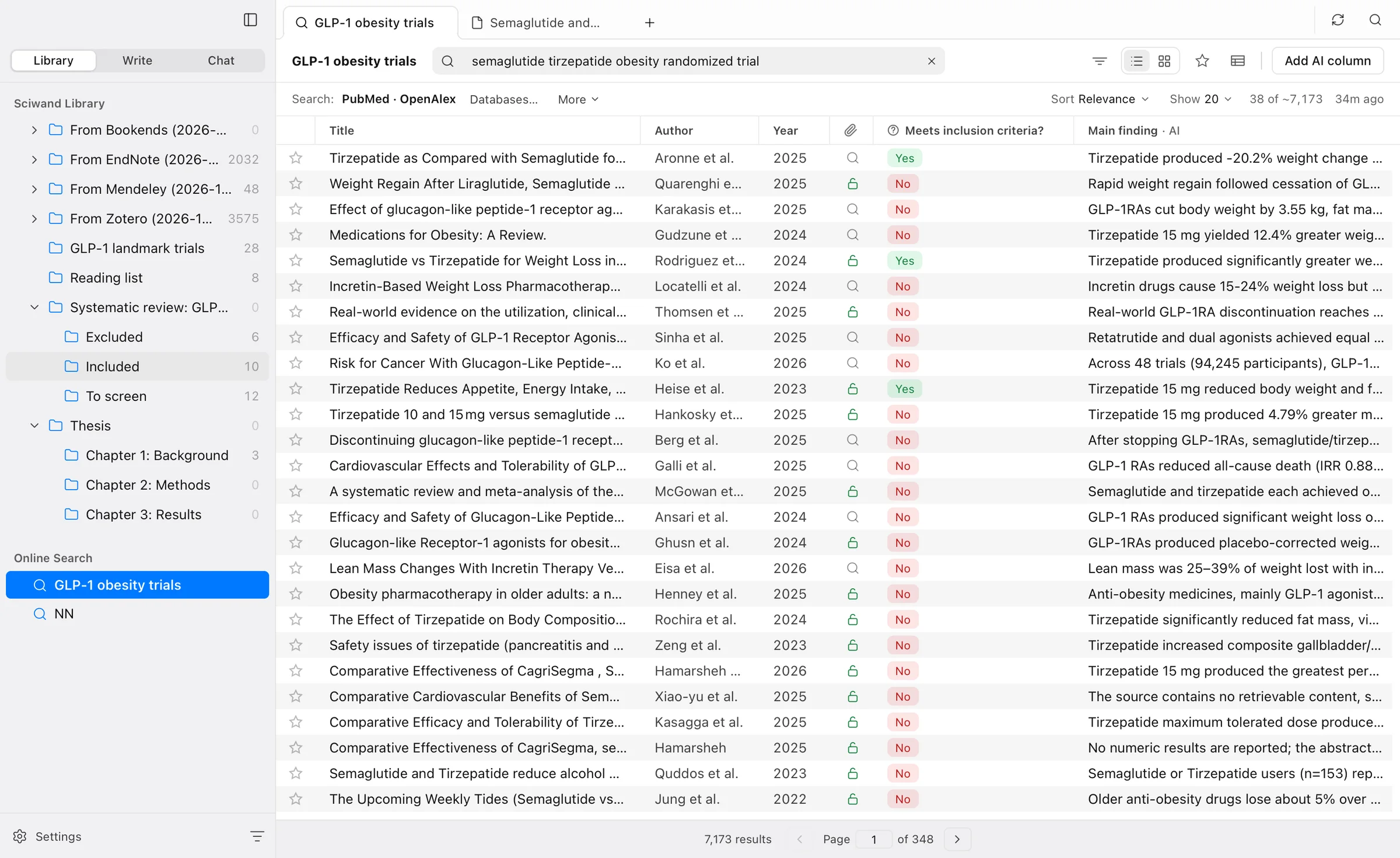
Search, analyse, write and cite, from one app. Connect to Zotero, Mendeley, EndNote and Bookends. Private, standalone.

  • macOS
  • Windows
  • Linux
LibraryWriteChat
New Collection
Sciwand Library
Sleep and learning24
Drafts6
Teaching12
PhD work10
Online search
New search
Zotero Library
# To read list55
All library3351
Sleep & memory5
Study methods8
Mendeley Library
EndNote Library
Bookends Library
Settings
Filter items… 24 items Add AI column
TitleAuthorYear Extract key findings Relevance to my topic
Sleep duration and academic performanceOkano et al.2019 Longer sleep in the week before an exam predicted higher grades. 9
The role of sleep in memory consolidationWalker & Stickgold2006 Sleep after learning is when the learning is stored. 8
Napping and cognitive performance: a meta-analysisLovato & Lack2010 Naps recover alertness, and part of recall. 8
Screen use before bed and sleep qualityHale & Guan2015 Evening screen use delays sleep onset in adolescents. 2
Caffeine, alertness and next-day recallSmith et al.2020 Caffeine restores alertness but not consolidation. 1
Spaced repetition versus massed practiceCepeda et al.2015 Spacing beats cramming at every interval tested. 7
Exam stress and sleep loss in medical studentsAhrberg et al.2020 Poor sleep before exams predicted lower scores. 7
Circadian preference and morning examinationsPreckel et al.2013 Later chronotypes underperform in morning exams. 6
Sleep extension before a testing weekVan Dongen et al.2003 Banking sleep in advance blunts later deficits. 7
Memory replay during slow-wave sleepRasch & Born2013 Replay during deep sleep is the consolidating step. 9
Exercise, sleep quality and next-day recallKredlow et al.2015 Exercise improves sleep quality more than recall. 5
Blue-light filters and sleep onset latencyShechter et al.2018 Filters help a little; timing of use helps more. 4
Note-taking method and retention at two weeksMueller & Oppenheimer2014 Longhand notes beat typed notes at delayed recall. 6
Caffeine timing and sleep architectureDrake et al.2013 Caffeine six hours before bed still costs an hour. 7
Retrieval practice versus rereadingRoediger & Karpicke2006 Testing yourself beats rereading at every delay. 8
Sleep and mood in first-year undergraduatesDoane et al.2015 Short sleep predicts low mood, which predicts grades. 5
Chronotype, term-time schedules and attainmentZerbini et al.2017 Timetables that fight chronotype cost attainment. 6
Sleep hygiene interventions in studentsDietrich et al.2016 Brief interventions shift habits for about a term. 4
Total sleep deprivation and working memoryLim & Dinges2010 One lost night measurably narrows working memory. 8
Weekend recovery sleep and school performanceSun et al.2019 Weekend catch-up recovers mood, not attainment. 6
Distraction, multitasking and study timeRosen et al.2013 Switching tasks inflates study time without gain. 5
Ambient noise and reading comprehensionSorqvist2010 Background speech costs comprehension, not recall. 3
Anxiety, sleep and examination outcomesHamilton et al.2021 Anxiety and short sleep compound each other. 7
Extract key findings

Sleep duration in the week before an examination predicted the grade obtained1“Students averaging under six hours in the week before an examination scored roughly one grade lower than those averaging eight.”page 4 · Results, and the association survived adjustment for how long students said they had revised2“The association held after adjusting for self-reported study hours.”page 4 · Results. Bedtime consistency contributed on top of duration.

Okano et al., 20194 of 12
npj Science of Learning (2019) 4:163
Sleep, self-reported study time and grade outcomes

What predicted the grade

Across the cohort, average sleep duration in the week before each examination predicted the grade obtained, and the association held after adjusting for self-reported study hours. Students who reported the same amount of revision but slept less performed worse, which is the comparison that separates time spent from learning retained.

Bedtime consistency contributed independently of duration: for two students sleeping the same total hours, the one with the more regular schedule scored higher. Naps taken in the afternoon were associated with a smaller benefit than the equivalent night-time sleep.

Students averaging under six hours in the week before an examination scored roughly one grade lower than those averaging eight.

Figure 3. Grade against nightly sleep, by course

Grades are z-scored within each course. Shaded bands are 95% confidence intervals from the mixed-effects model.

Sleep window before examsSmith et al. 2022
BI<>H1H2H3

The week matters more than the night. Sleep on the night before an examination predicted nothing on its own; the average across the preceding week did.

Worth pairing with the napping meta-analysis before I claim naps recover it.

Actigraphy versus self-reportOkano et al. 2019
BI<>H1H2H3

Measured, not remembered. The wrist actigraph is why duration and timing here are recorded rather than recalled.

Check whether the self-report arm reproduces the same effect size.

01 Search

  • 10+ academic databases queried from inside the app
  • Full text found for you, including papers behind a paywall
  • Relevance scores you can sort and filter the whole list by
  • Live citation graph: references, citing papers, related work
  • Paste a DOI, PMID, arXiv ID, ISBN or a title and it resolves, fetches the PDF and files the record
  • Saved searches you can re-run as the literature moves

02 Analyse

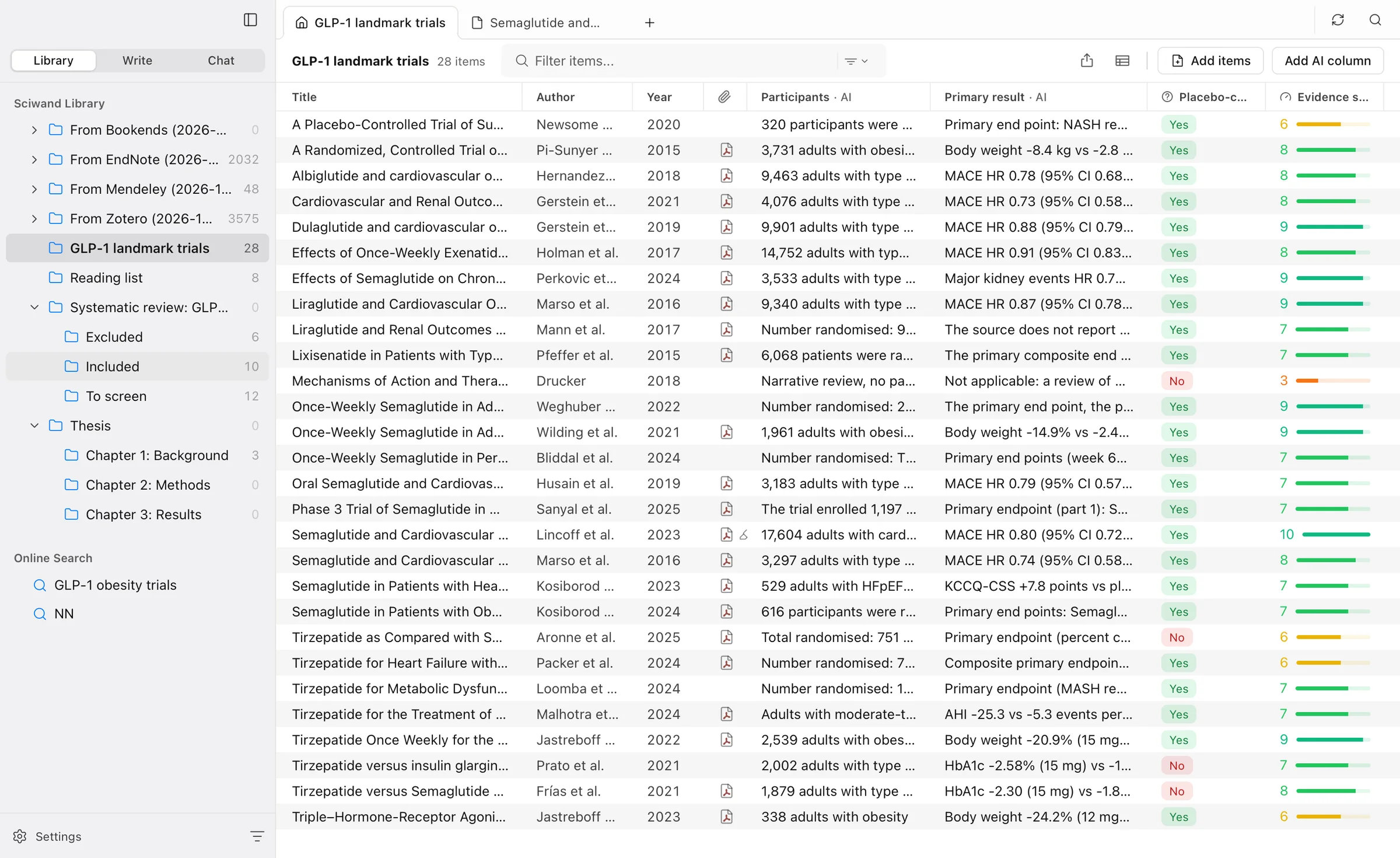
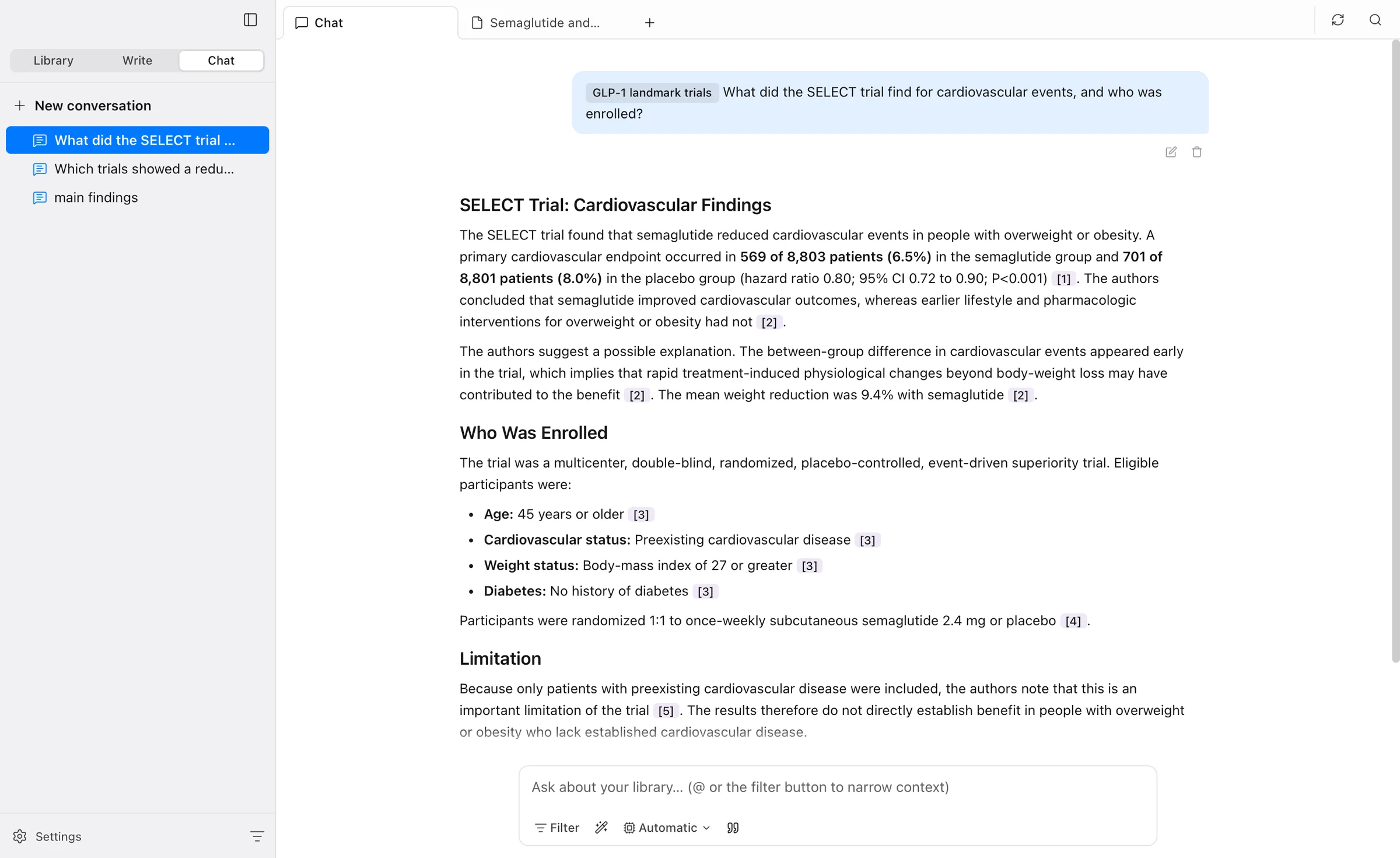
  • Ask one question across hundreds of documents at once
  • Yes / no screening columns for literature reviews at scale
  • 1–10 score columns on any dimension you define
  • Dataset columns that pull many rows out of a single paper, one row per case, cohort or experiment
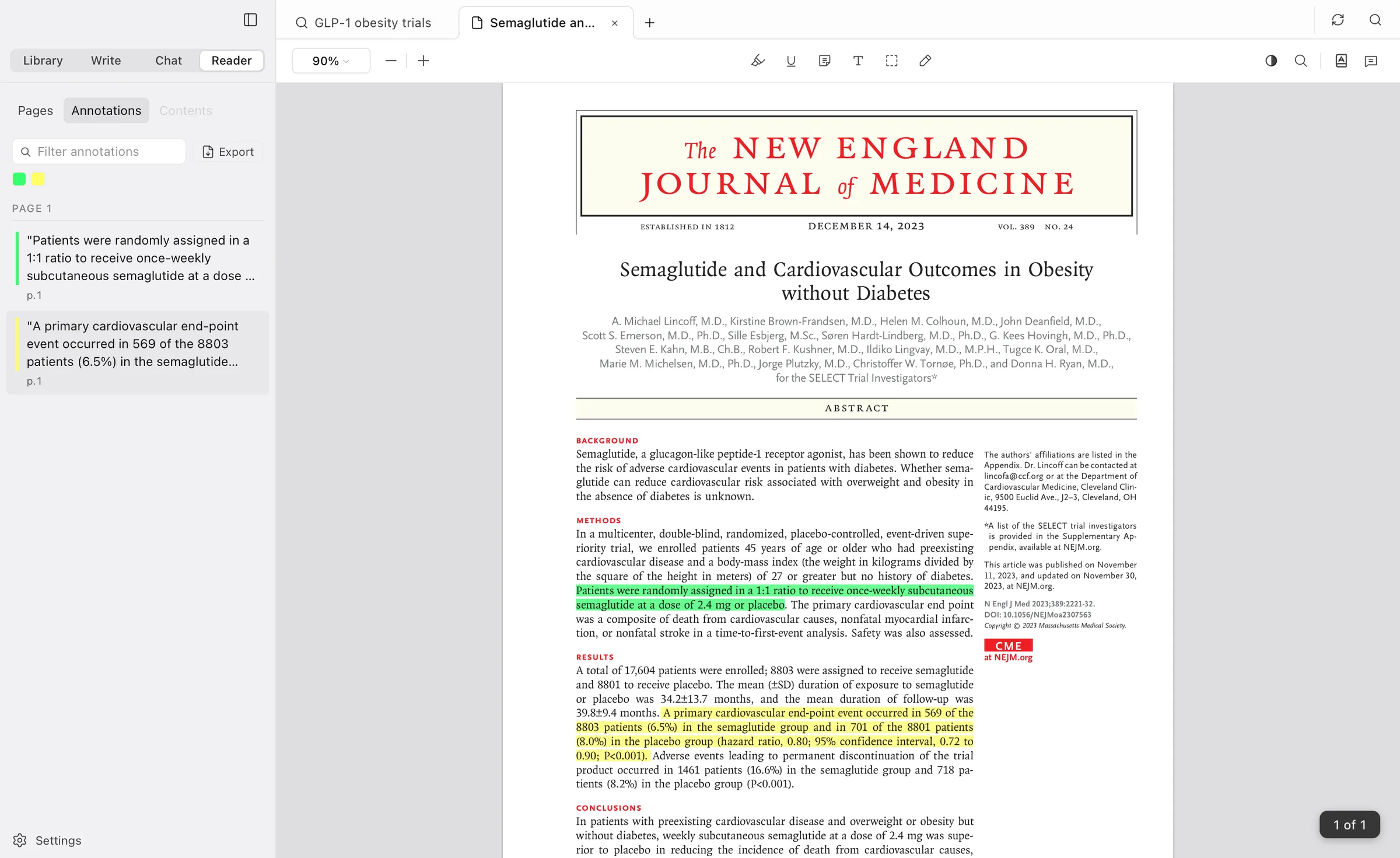
  • Reflowable PDF and EPUB reading, so a two-column paper reads at any width, with the same highlights, notes and citations
  • Every answer cited to a highlighted sentence in the source

03 Write

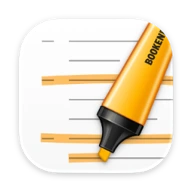
Write in Sciwand's own editor, or in Microsoft Word through the add-in.

  • A standalone writer in the app, customisable down to the toolbar, the layout and your own one-click AI actions
  • Or the Microsoft Word add-in, which brings the same library, citations and AI into the document you were already writing
  • A full citation engine: 10,000+ styles, live renumbering, CSL you can edit
  • Quote a sentence from a source, not the whole paper
  • Charts, LaTeX equations and a scientific figure generator, editable and checked against your text
Fits where you already are

Nothing to migrate. Nothing to give up.

Sciwand works standalone or beside the tools you have. Imports are one-way, so your reference manager stays exactly as you left it.

  • Zotero
  • Mendeley
  • EndNote
  • Bookends
  • Microsoft Word
  • Obsidian
  • Bear
  • Notion

Any document you have

PDF, Word, EPUB, Markdown, plain text and saved web pages. Drop a file, a whole folder, or paste a DOI, PMID, arXiv ID, ISBN or a title.

Your data, your call

Your library, annotations and notes live on your own disk. Cloud sync is optional, and you pick category by category what syncs.

Your model, your key, your bill.

Bring the key you already have, or run a model on your own machine and let nothing leave it. Sciwand is not reselling you tokens.

  • Anthropic Claude
  • OpenAI
  • Google Gemini
  • xAI Grok
  • DeepSeek
  • Qwen
  • Groq
  • Together AI
  • Perplexity
  • OpenRouter
  • Ollama
  • LM Studio
How it compares

Where Sciwand differs.

Two different questions, so two different tables. Against a reference manager the question is what it can do with the library once it holds it. Against an AI tool it is whether anything underneath the answer is real.

Zotero, EndNote and Mendeley keep your references in order. Sciwand keeps them in order and then reads them.

Feature comparison of Sciwand, Zotero, EndNote and Mendeley
Capability Sciwand Zotero EndNote Mendeley
Stores your references, PDFs and metadata Yes Yes Yes Yes
Cites in Microsoft Word, renumbering as you edit Yes Yes Yes Yes
Thousands of citation styles Yes Yes Yes Yes
Ask a question across your whole library, answered with citations Yes No No No
Every answer traced to the sentence it came from Yes No No No
Screens hundreds of PDFs into a comparison grid Yes No No No
A document writer inside the app, citation engine underneath Yes Notes only No No
AI inside Word: ask your library, ask your draft, rewrite a selection Yes No No No
Imports your existing library, one way, nothing to migrate Yes Partial Partial Partial
Citations that carry the quoted passage, not just the paper Yes No No No
One prompt designs a whole comparison grid, not one column Yes No No No
Scientific figure generator, editable and checked against your text Yes No No No
Charts built from a spreadsheet or a table you paste Yes No No No
Tables extracted out of a PDF and turned into rows you can score Yes No No No
Reads EPUB, Word, Markdown and saved web pages, not only PDF Yes Partial Partial No
Built-in reader with highlights, notes and full-text search Yes Yes Yes Yes
Ten or more literature databases searched from inside the app Yes Partial Partial Partial
Finds the full text for you, including papers behind a paywall Yes No No No
Live citation graph: references, citing work, related and shared Yes No No No
Bulk actions across a selection: import, tag, score, export Yes Partial Partial Partial
Runs a local model, so nothing leaves the machine Yes No No No
Free forever for everything except the AI features Yes Yes No Partial

Compiled from each product's publicly documented features, checked August 2026. Zotero, EndNote, Mendeley, ChatGPT, NotebookLM and Jenni are trademarks of their respective owners and are not affiliated with Sciwand. Spotted something out of date? Tell us.

What people say
The most accurate reference manager I have used. Every citation it writes is one I can open and read back, which is not something I could say about the last one.
Questions

The things people ask first.

Is this a reference manager or a document writer?
Both, and that is the point. One side is a full reference manager: collections, metadata, PDFs, annotations, notes, a citation graph, and sync with Zotero, EndNote, Mendeley or Bookends. The other is a real writing environment with its own editor, or the Word add-in if you would rather stay in Word. They are the same application, so a paper you are reading is one keystroke from being cited in the paragraph you are writing, and the quote you picked out of it travels with the citation instead of being retyped.
Is it free?
Yes, and permanently. Reading, searching, your whole library, annotations, notes, the writer, the Word add-in, the citation engine with its 10,000+ styles, and the per-passage quote linking are all free, with no account and no time limit. The AI features are the exception: they run for seven days so you can try them, and need a licence after that. Even then the intelligence is mostly bring-your-own-key, so you pay your model provider directly at cost rather than a subscription to us, and a local model costs nothing at all.
Will it hallucinate citations?
That is the failure mode Sciwand is built around. Answers are generated against the documents in your library rather than from model memory, and each one carries a badge that opens the source PDF at the page with the sentence highlighted. If a claim cannot be anchored to a passage you own, you will see that rather than a confident-sounding reference to a paper that does not exist.
Does my work leave my computer?
Only if you ask it to. Your library, annotations and notes are stored on your own disk, and cloud sync is optional — you choose which categories sync, if any. If you use a hosted model, the text needed to answer a given question goes to whichever provider's key you supplied, and nowhere else. Run a local model and nothing goes to a provider at all.
Is this going to write my paper for me?
No, and that is deliberate. The editor suggests continuations grounded in your own sources, and you accept, edit or dismiss each one. It is designed to remove the mechanical parts of writing up, such as finding the passage you half-remember or formatting a reference, while leaving the argument entirely to you.
Do I have to abandon Zotero or EndNote?
No. Sciwand syncs seamlessly with Zotero, EndNote, Mendeley and Bookends, with more reference managers on the way. The sync is one-way, so nothing is written back and your existing library is never modified. Plenty of people run it purely as a reading and analysis layer on top of what they already have.
Does it work with Microsoft Word?
Yes. The add-in puts a SCIWAND tab in Word's own ribbon on Windows and macOS, with your library, real citations in whichever style you need, and the same AI you get in the app: ask your library, ask the draft in front of you, or rewrite a selection. Citations renumber and restyle themselves, and the bibliography keeps up. It is in beta, and it installs from the app's own settings.
Which databases can it search?
Ten academic databases from inside the app, including PubMed, Google Scholar, arXiv and Semantic Scholar. Results can be screened with the same AI columns you use on your own documents, so discovery and screening are a single pass rather than two.
Get started

Point it at your own sources and see.

On macOS, Windows and Linux, with the Word add-in for Windows and macOS. Your library stays on your machine.

Latest release · all releases · read the docs